A smoke detector is one of the most critical safety devices in any building, yet its effectiveness can be seriously compromised when it is installed in environments where humidity levels are consistently elevated. Bathrooms, industrial kitchens, laundries, greenhouses, coastal facilities, and manufacturing plants often expose detection equipment to moisture-laden air that standard devices were never designed to handle reliably. This raises a practical and important question for facility managers, safety engineers, and building contractors: can a smoke detector actually function correctly in a high-humidity environment, or does moisture render it unreliable?
The short answer is: yes, a smoke detector can work in high-humidity environments, but only if the right type of device is selected, correctly specified, and properly installed. A standard residential or general-commercial smoke detector is not built for such conditions and will likely produce nuisance alarms, suffer sensor degradation, or fail silently over time. Understanding the physics of humidity's effect on smoke detection technology, and knowing which design features overcome those challenges, is essential before making any installation decision in a demanding environment.
Inside every smoke detector lies a sensing chamber where smoke particles are detected either by scattering light or by disrupting an ionization current. When ambient humidity is high, water vapor molecules and microscopic water droplets enter this chamber along with the surrounding air. These particles behave optically and electrically in ways that partially mimic the presence of smoke, which is why humidity is one of the primary causes of false alarms in improperly specified detectors.
In photoelectric smoke detectors, light from an internal LED is directed away from a photosensor during normal operation. Smoke particles scatter this light toward the sensor, triggering an alarm. Water droplets and condensation particles can produce a similar scattering effect, causing the smoke detector to interpret humidity as smoke. This is particularly common when relative humidity rises above 85 percent or when sudden temperature changes cause rapid condensation inside the sensor chamber.
Ionization-type smoke detectors use a small radioactive source to ionize air between two charged plates. Smoke particles disrupt this ion current and trigger the alarm. High moisture content in the air also conducts electrical charge between those plates, altering the baseline current in ways that can trigger false alarms or, in some cases, desensitize the sensor so that genuine smoke goes undetected. Either failure mode creates a serious safety risk.
Beyond immediate false alarms, sustained exposure to humidity causes cumulative physical damage inside a smoke detector that degrades its long-term performance. Metal components inside the sensing chamber and on the printed circuit board are vulnerable to oxidation and corrosion when moisture is consistently present. Electrical contacts corrode, sensor calibration drifts, and optical surfaces become contaminated with mineral deposits left behind as water evaporates.
Plastic housings on standard smoke detectors are not sealed against moisture ingress. Over weeks and months in a high-humidity environment, moisture finds its way into every cavity, accelerating the aging of electronic components far beyond what the manufacturer intended. A smoke detector installed in such conditions without humidity-rated protection may fail its annual inspection or, more dangerously, fail silently during an actual fire event.
This is why industrial and safety standards distinguish between general-purpose and humidity-rated detection equipment. Facilities that ignore this distinction expose occupants to unacceptable risk and may face regulatory non-compliance during audits or insurance assessments.
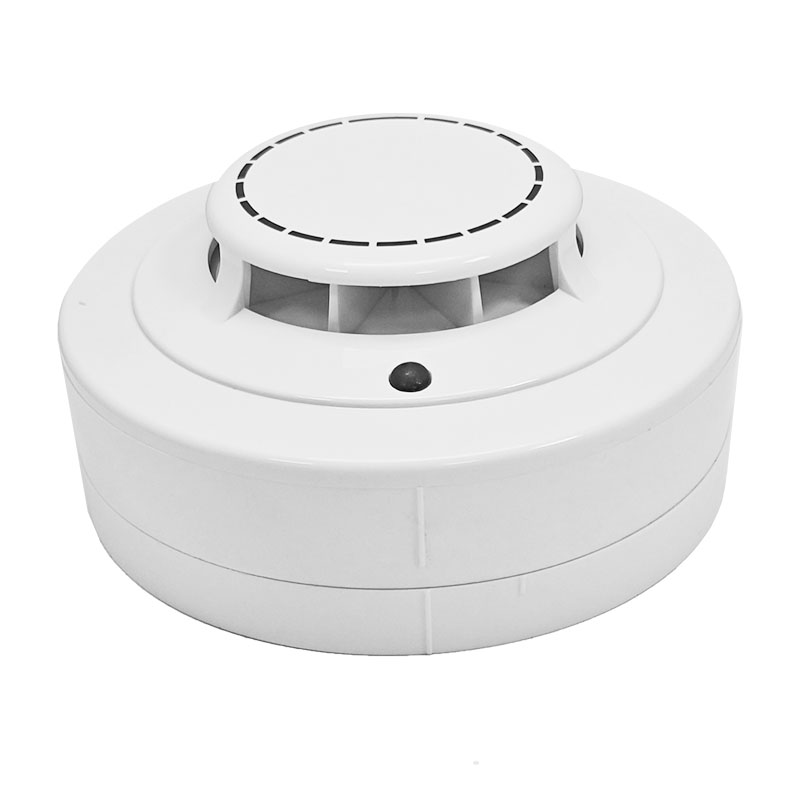
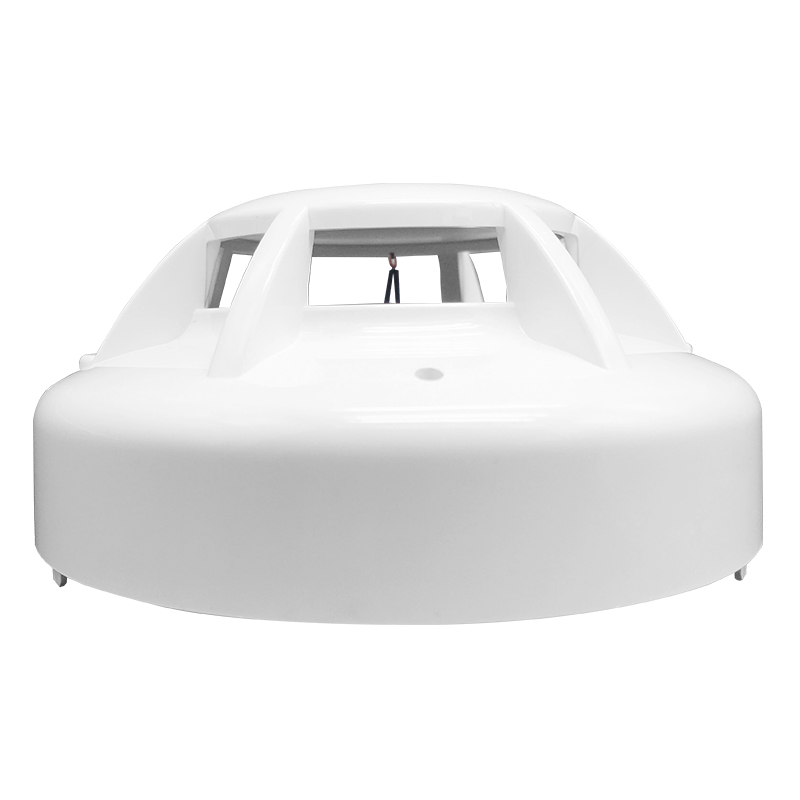
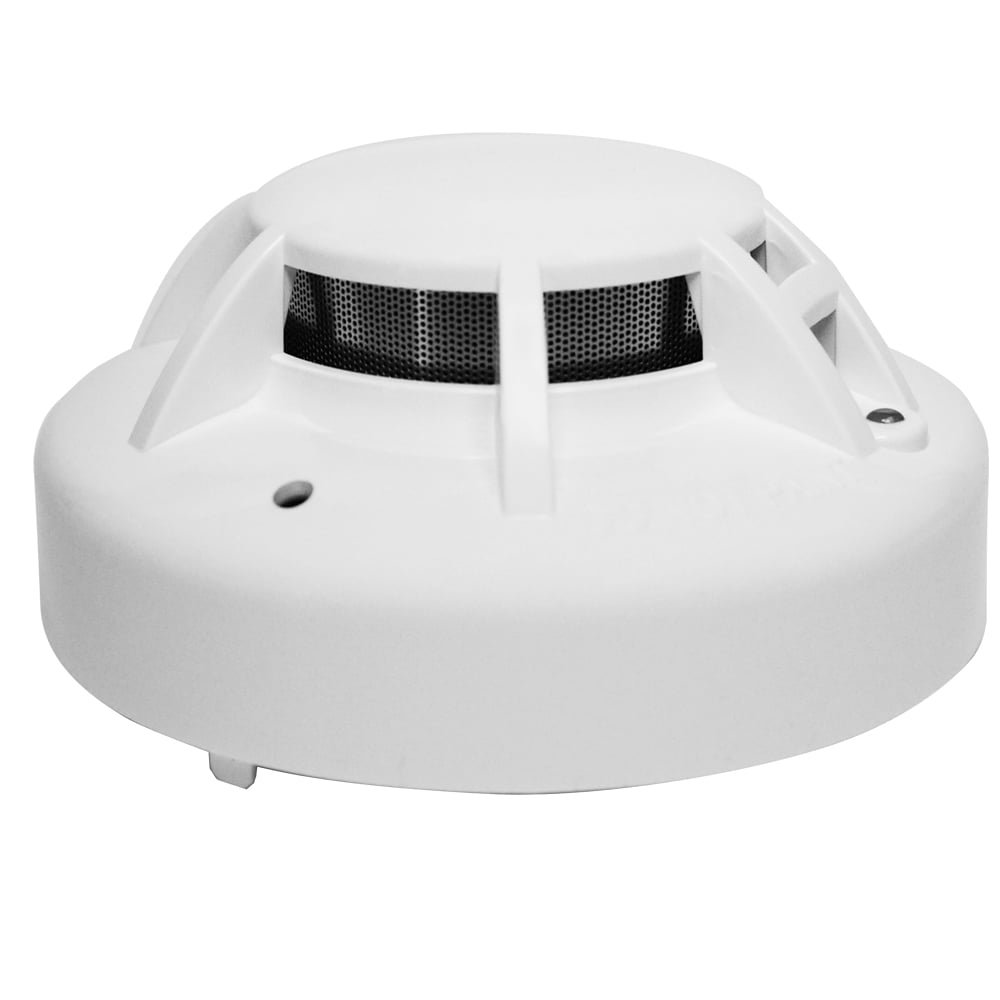
A smoke detector intended for high-humidity use must be housed in an enclosure that controls moisture ingress without blocking the airflow needed to carry smoke particles into the sensing chamber. This balance is achieved through intelligent housing design and IP (Ingress Protection) ratings. Detectors rated IP42 or higher provide measurable resistance to water droplets and condensation, while designs with labyrinthine entry channels allow smoke to enter but physically block water droplets from reaching the sensor.
The labyrinth design is particularly important. By creating a tortuous pathway into the sensing chamber, manufacturers ensure that heavier water particles fall out of the airstream before reaching sensitive optical or ionization components, while lighter smoke particles continue through. This structural solution is far more reliable than simply coating internal components with moisture-resistant materials, and it does not impair the detection speed that makes a smoke detector effective during an actual fire.
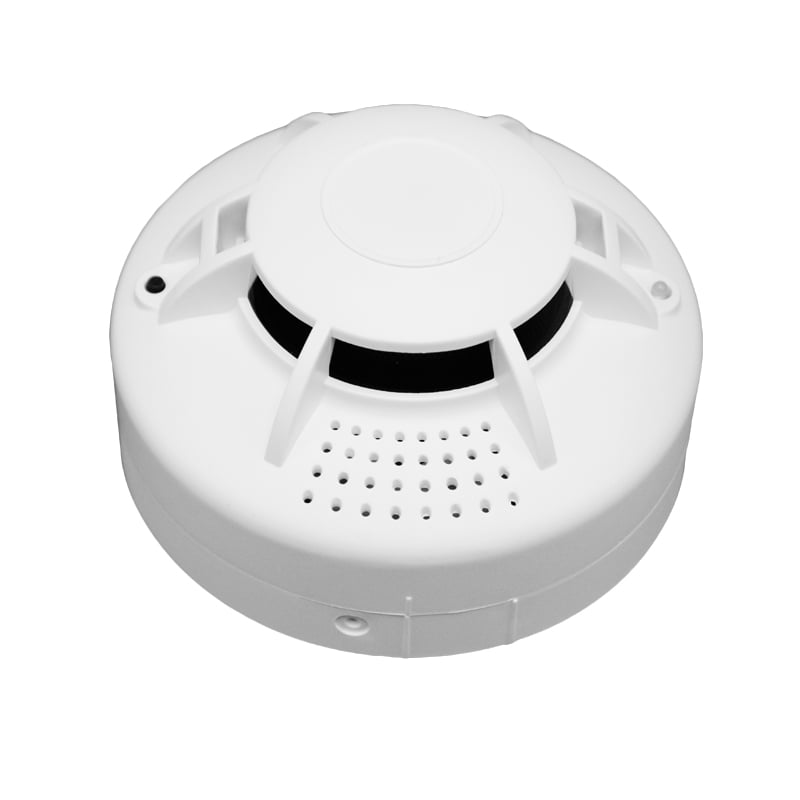
Well-designed humidity-resistant smoke detectors also use materials that resist the corrosive effects of salt air, chemical vapors, and biological contamination — conditions that often accompany high-humidity industrial environments. This broadens their suitability beyond simple moisture protection into genuinely hostile environmental conditions.
Modern smoke detectors designed for challenging environments incorporate internal compensation logic that adjusts alarm thresholds based on ambient conditions. Rather than responding to a fixed particle density level, these devices continuously monitor baseline sensor readings and adjust their trigger points accordingly. This approach prevents the sensor from interpreting a rise in humidity as smoke while still maintaining the sensitivity needed to detect genuine combustion products quickly.
Some advanced designs pair the smoke-sensing element with a secondary environmental sensor that measures temperature and humidity. When the system detects that ambient humidity has risen sharply — as it would during a shower cycle or a production washdown — it applies a compensation factor that prevents a nuisance alarm. However, if the optical or ionization signal rises simultaneously with humidity in a pattern consistent with actual smoke, the device still triggers the alarm appropriately.
This calibration intelligence is what separates a professionally specified smoke detector from a general consumer device. In high-humidity environments, the ability to distinguish between environmental moisture and genuine fire signatures is not optional — it is a fundamental performance requirement.
Industrial facilities represent some of the most demanding environments for a smoke detector. Food processing plants, breweries, commercial laundries, pharmaceutical cleanrooms, and paper mills all combine high ambient humidity with significant fire risk from machinery, electrical systems, or combustible materials. In these settings, a standard smoke detector would either generate constant false alarms — causing alarm fatigue and resulting in disabled systems — or suffer sensor failure from moisture damage.
Coastal and marine facilities present another category of humidity challenge. Salt-laden air at high relative humidity is far more corrosive than clean humid air, and smoke detectors in ports, offshore platforms, or coastal warehouses must be rated for both moisture and corrosive atmosphere resistance. Here, the combination of IP-rated enclosures and corrosion-resistant materials is non-negotiable for reliable long-term performance.
Greenhouses, aquaculture facilities, and indoor agriculture operations face nearly continuous high-humidity conditions, often at elevated temperatures. In these environments, a smoke detector must function reliably over extended periods without maintenance access, making the durability of sealed, humidity-compensating designs particularly valuable.
Not every high-humidity installation challenge involves an industrial site. Within commercial and residential buildings, specific zones create localized humidity conditions that exceed what standard smoke detectors can handle. Commercial kitchens, hotel bathrooms, swimming pool plant rooms, spa facilities, and gymnasium changing rooms all generate steam, condensation, and elevated moisture that will cause nuisance alarms or sensor degradation in standard equipment.
Building codes in many jurisdictions require heat detectors rather than smoke detectors in zones like commercial kitchens precisely because of steam and grease contamination. However, in spaces where smoke detection is the appropriate technology — such as storage areas adjacent to kitchens, or changing rooms connected to pool halls — selecting a humidity-rated smoke detector becomes both a safety and a compliance issue.
Facility managers who standardize on humidity-tolerant smoke detectors throughout a building can reduce nuisance alarm incidents significantly, lowering operational disruption and reducing the risk that staff will begin ignoring or disabling alarm systems. This behavioral safety benefit is as important as the technical performance improvement.
Even a humidity-rated smoke detector benefits from thoughtful placement that avoids direct steam impingement, condensation drip zones, and pressure washing splash areas. Mounting a smoke detector on a ceiling directly above a steam source — such as a cooking vat or shower head — unnecessarily maximizes its moisture exposure and invites sensor contamination even in a well-designed device. Strategic placement slightly offset from peak moisture sources reduces long-term stress on the sensor while maintaining adequate coverage geometry.
Where ceiling mounting is unavoidable in high-steam areas, using mounting bases with drip guards or protective canopies directs condensation water away from the detector body. These accessories are available for most industrial-grade smoke detector families and represent a low-cost way to extend device life and reduce maintenance frequency in difficult environments.
Cable entries and conduit connections into the smoke detector body should be sealed with appropriate cable glands and conduit fittings to prevent moisture from tracking along cables and into the housing. This installation detail is frequently overlooked but accounts for a significant proportion of moisture-related failures in environments where the ceiling or wall surfaces are regularly wet.
A smoke detector installed in a high-humidity environment should be tested more frequently than one in a standard dry location. Humidity gradually shifts sensor baselines, builds mineral deposits on optical surfaces, and accelerates electronic aging. Quarterly functional testing, combined with annual full inspection and cleaning, is a reasonable baseline for demanding environments. Many building management systems now support automatic self-testing cycles that provide continuous performance confirmation without requiring manual intervention.
During inspection, cleaning the sensing chamber with dry compressed air removes particulate and moisture residue that accumulates over time. Optical surfaces should be inspected for fogging or mineral scaling and cleaned according to the manufacturer's guidance. Any smoke detector showing calibration drift during testing should be replaced rather than recalibrated in the field, as drift is often a symptom of cumulative moisture damage that will progress.
Keeping maintenance records for each smoke detector in a high-humidity zone provides a performance history that helps identify devices that are aging faster than expected. This data-driven maintenance approach helps facility managers schedule proactive replacements before failures occur, maintaining continuous protection coverage and regulatory compliance.
Most standard smoke detectors are tested and rated for environments with relative humidity between 10 percent and 85 percent. Above 85 percent relative humidity, moisture interference with the sensing chamber becomes significant enough to cause nuisance alarms or sensor errors. In environments where humidity regularly exceeds this threshold — even temporarily — a specifically humidity-rated smoke detector should be used instead of a standard model.
Yes. Repeated condensation cycles inside the sensing chamber leave mineral deposits on optical lenses, corrode metal contacts, and degrade electronic components on the circuit board. Over time, this cumulative damage shifts sensor calibration and reduces detection reliability. A smoke detector that has experienced significant condensation exposure should be inspected carefully and replaced if any physical contamination or corrosion is found during the inspection process.
Not necessarily. Heat detectors are immune to humidity interference but only respond to temperature rise, which means they detect fires later than smoke detectors do — often after significant smoke has already been produced. In spaces where smoke is the earlier and more reliable fire indicator, a properly specified humidity-rated smoke detector is the better choice. Heat detectors are typically reserved for zones where smoke detection is inherently unreliable, such as directly above cooking equipment or in highly dusty industrial areas.
Look for the product's IP rating, its specified operating humidity range in the datasheet, and any certification marks from standards bodies such as EN 54, UL 268, or equivalent regional fire detection standards. A humidity-rated smoke detector will explicitly state its maximum operating relative humidity — typically 95 percent non-condensing for industrial models — and will carry certification evidence that it has been tested in those conditions. Always verify these specifications in the product's technical documentation before installation in any demanding environment.
Copyright © 2026 RISOL TECH LTD All Rights Reserved Privacy policy
 EN
EN